Analysis
Analysis
Three Ways to Pick a Eurovision Asia Entry — and What Each Costs
Internal picks, song-only votes, open finals: Eurovision Asia's eleven countries use three selection models, and Mongolia switched from one to another mid-season. What each one trades away.
Eleven countries, eleven broadcasters, and three genuinely different answers to the same question: how do you decide what to send to Bangkok?
This isn’t cosmetic variation. The three models put the public in charge of different things, and each gives something up to get something else.
1. Fully internal
Malaysia. TV3 selected Aina Abdul with a professional jury and announced her during Anugerah Juara Lagu 40 on 15 August. There was no public vote on the artist, and none on the song: “Bluest Sky,” which she wrote herself, was revealed in early October and released on 8 October.
What it buys: speed, and total control over who represents you. You can approach an established star directly rather than hoping one enters your talent show.
What it costs: the campaign. Every other country gets a broadcast event that builds an audience invested in the outcome before the contest starts. Malaysia got a single announcement moment, then nearly eight weeks of waiting for a song. TV3 clearly recognised the gap — it commissioned Malaysia Memburu Impian, a first-person docuseries following Aina to Bangkok, which is essentially a manufactured replacement for the narrative arc a national final would have produced.
2. Internal artist, public song vote
Laos, Vietnam — and now Mongolia. All three picked the performer behind closed doors, then handed the song choice to viewers.
Laos selected Thinla internally; Sieng Lao: The One chose “Bae” from three of her songs across 23–24 September. Vietnam selected Tóc Tiên; The Sound of Vietnam on 3 October chose “Em Tiên” from five, all written by separate production teams for the same singer and released in advance as an EP.
Mongolia is the newcomer to this group, and the only country to change model mid-season. Mongolia’s Chosen One had been presented as an open final until 1 October, when Beck was announced as an internal pick. The show on 10 October then chose “Light” from four songs written for him.
What it buys: most of the benefits of both. You lock in a known performer with no risk of an upset, but you still get a televised event, a streaming release and a fortnight of public engagement.
What it costs: the stakes. There’s a ceiling on how invested an audience gets in a vote where the outcome is the same person either way. It also narrows the range of what can win — a handful of songs built for one artist in one process will sit closer together than an open field would.
It is also the model that has told us least. Laos and Vietnam each announced a winning song and nothing more: no points, no runner-up. Mongolia named its top three, but published no points either.
3. Open final
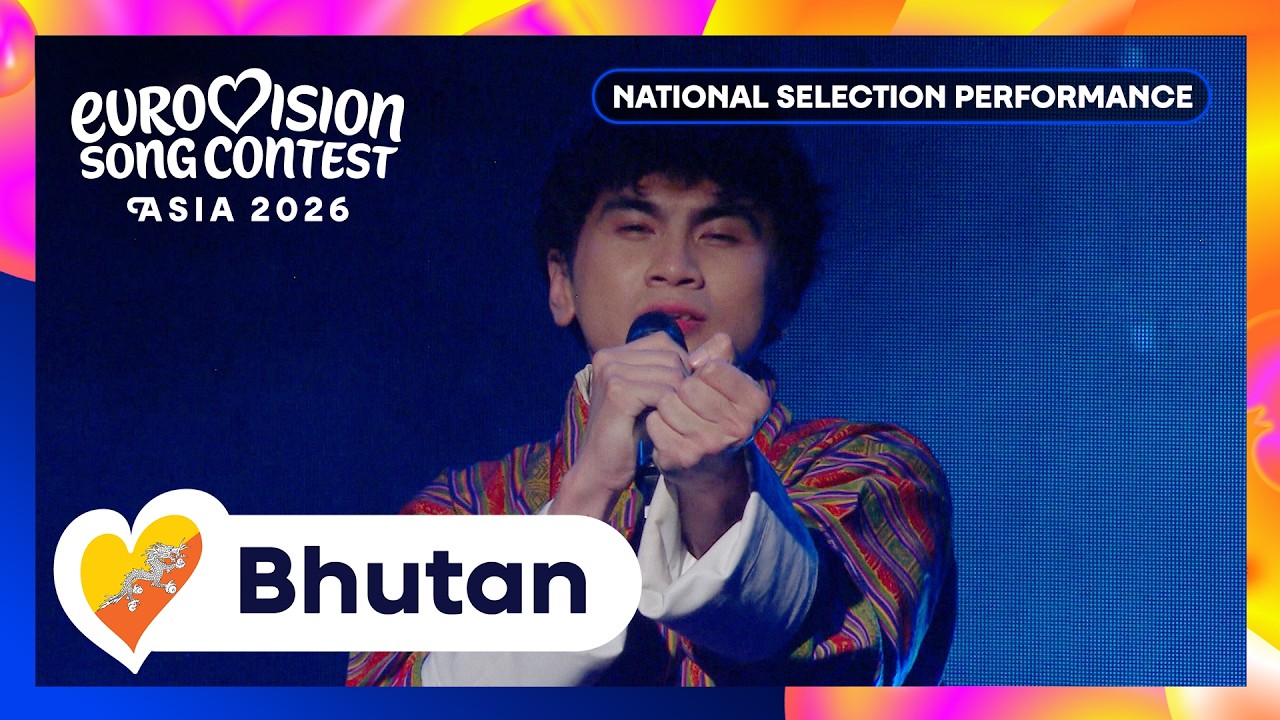
Bhutan, the Philippines, South Korea, Thailand, Bangladesh, Nepal and Cambodia. Artists and songs compete together; the public helps decide both.
What it buys: genuine jeopardy, and the possibility of an entry nobody expected. Bangladesh is the clearest example: an open final produced Beatmosphere, an a cappella and beatbox group that few outside the country would have predicted, and that an internal committee might never have chosen. It’s also the only model that can surface a performer who wasn’t already on the broadcaster’s radar.
What it costs: control and time. You can’t guarantee your biggest domestic name will be on the plane, and you need months of production lead time — which is part of why the countries that announced late didn’t choose this route.
The split is the same everywhere
When we first wrote this piece, we said the voting formulas differed: 40/40/20 in some countries, 50/50 in Bangladesh and Vietnam, unpublished in Thailand.
That turned out to be wrong. Every national final that has aired — eight of them — used 40% professional jury, 40% domestic public, 20% Rest of the World. The “50/50” descriptions were shorthand for a system where the public half is split between home and international voters. We’ve logged the correction in our fact-check.
So the three models differ in what is voted on, not in how the vote is weighted. Whatever is on the ballot, a fifth of the decision belongs to viewers outside the country.
The score so far
With ten entries complete, the tally by model is:
- Fully internal: 1 — Malaysia
- Internal artist, song vote: 3 decided — Laos, Vietnam, Mongolia
- Open final: 6 decided — Bhutan, the Philippines, South Korea, Thailand, Bangladesh, Nepal — with Cambodia to come
Nobody knows which model wins
It would be easy to write the conclusion that open finals produce better entries, or that internal picks produce stronger performers. There is no evidence for either claim, because this is a first edition with no history to compare against.
What can be said is that the models are being chosen for practical reasons — how late a broadcaster started, whether it already had a star available, how much production capacity it could commit — rather than any theory about what wins. Mongolia’s switch fits that exactly: a country that joined in mid-August did not have time to run a talent search.
Whether any of it correlates with results in Bangkok is a question for 15 November.
Every date and format sits on the national selections calendar, and who’s confirmed so far is on the artists tracker.
Last updated 7 October 2026.