our call, in pen
Eurovision Asia 2026 Odds: Who Will Win?
South Korea leads our Eurovision Asia 2026 odds on 18% — but only a single point ahead of host nation Thailand on 17%. This is an editorial estimate of each country's chances, not a live betting market. Ten of the eleven countries now have both an artist and a song, so most of the field can finally be judged on an actual entry.
What changed on 14 Oct. Malaysia released "Bluest Sky" on 8 October and moves up half a point for a complete entry: a big ballad from an established star with the voice for it. Cambodia gives back half a point as the only country still without a song, three days before its final. Mongolia chose "Light" on 10 October and holds — a complete entry by now is what its figure already assumed. Nobody else moves.
Win chance by country
-
 Play JUNHEE — “Deep Dive”, national selection performance
 South Korea our pick
JUNHEE — “Deep Dive”
18% 9/2 unchanged since 7 OctJUNHEE and "Deep Dive" have been locked in since 4 September, backed by the deepest production infrastructure and the largest existing international fanbase in the contest. Unchanged since 7 October, when it gave up a point as Thailand and Vietnam completed their entries.
-
 Play Mang & Daou — “Aroma”, national selection performance
 Thailand home crowd
Mang & Daou — “Aroma”
17% 5/1 unchanged since 7 OctMang & Daou won Thailand's Chosen One on 27 September with "Aroma" — a Thai-language duet, performed at home, by an act with a proven voting fanbase: Daou won the survival show LAZ iCON on a public vote in 2021. That moved Thailand up two points on 7 October, because home advantage was already priced in and a credible entry on top of it was not. Held since.
-
 Play Carmelle — “Sobra-Sobra”, national selection performance
 Carmelle — “Sobra-Sobra”
13% 13/2 unchanged since 7 OctCarmelle and "Sobra-Sobra" have been confirmed since 30 August, from one of the largest music markets in the contest and a diaspora that mobilises hard for televised competitions. Unchanged — a settled entry that will have had eleven weeks of exposure by the night of the final.
-
 Play Tóc Tiên — “Em Tiên”, national selection performance
 Tóc Tiên — “Em Tiên”
12% 7/1 unchanged since 7 OctTóc Tiên's song is chosen: "Em Tiên" won The Sound of Vietnam on 3 October, sung in Vietnamese. A two-decade star with a complete entry moved up a point on 7 October and holds there. The result itself told us little beyond that — VTV published the winner, not the scores.
-
 Play Aina Abdul — “Bluest Sky”, official visualiser
 Malaysia climbing
Aina Abdul — “Bluest Sky”
9.5% 19/2 up 0.5 points since 7 Oct"Bluest Sky" came out on 8 October: a large-scale power ballad Aina Abdul wrote herself, mostly in English with some Malay, arranged with Mac Chew. A complete entry from an established star with a big voice, in the kind of song juries tend to reward, moves up half a point. The first fan-site reviews have been warm, though it is too early for reaction to mean much.
-
 Play Beatmosphere — “Tumi Ele”, national selection performance
 Beatmosphere — “Tumi Ele”
6.5% 14/1 unchanged since 7 OctBeatmosphere won Voice of Bangladesh on 30 September with "Tumi Ele," an a cappella and beatbox piece with no instruments at all. It is the most distinctive entry confirmed so far, which cuts both ways: memorable in an eleven-song show, but untested with juries. Held level until there is a reason to move it either way.
-
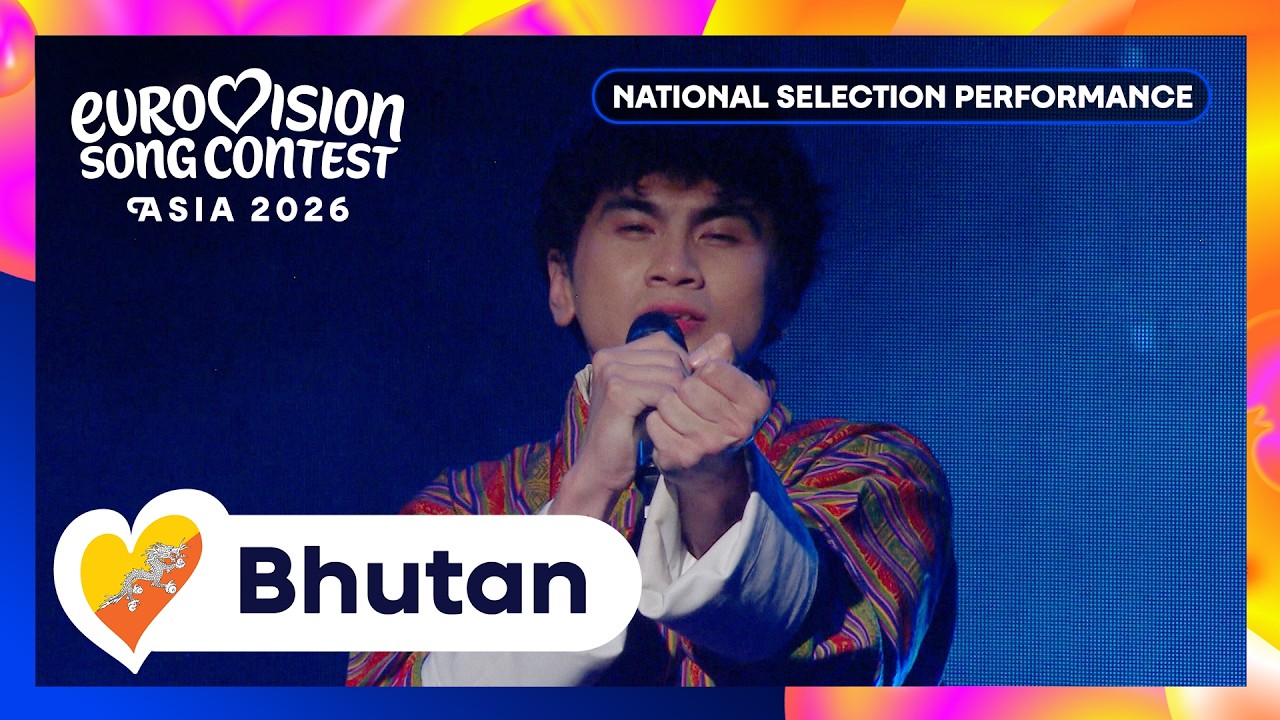 Play Nyendra — “Lhayi Semo”, national selection performance
 Nyendra — “Lhayi Semo”
6.5% 14/1 unchanged since 7 OctNothing about Bhutan has changed: Nyendra has had a confirmed song since 11 August and the longest runway of anyone. It slipped a point on 7 October as four more countries completed their entries — an early-mover advantage shrinks as the field fills in around it. Held since.
-
 Play Thinla — “Bae”, national selection performance
 Thinla — “Bae”
5.5% 17/1 unchanged since 7 OctThinla's song is decided — "Bae," in English and Lao, chosen on 24 September. That was the resolution the September revision was already anticipating, so it moved little: half a point came off on 7 October as Thailand and Vietnam firmed up above it. Held since.
-
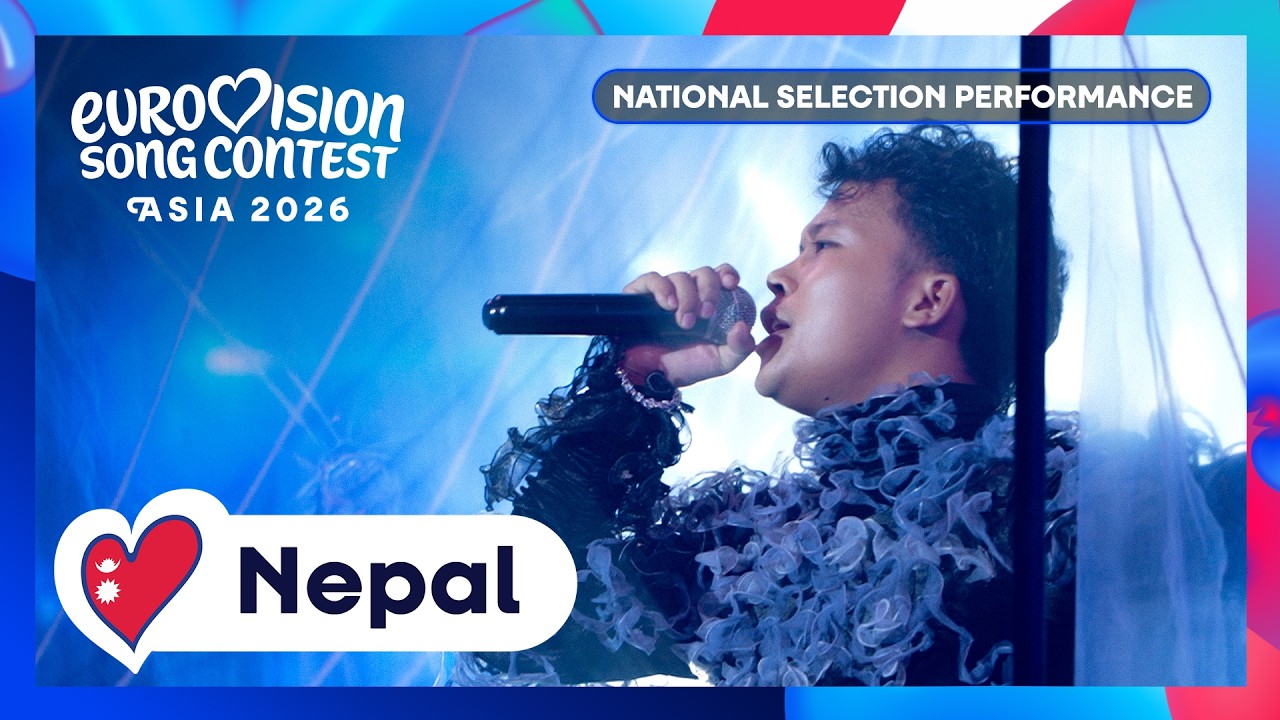 Play Pratik Himal Rai — “Ananta Maya”, national selection performance
 Pratik Himal Rai — “Ananta Maya”
4.5% 21/1 unchanged since 7 OctPratik Himal Rai won Nepal Decides on 7 October with "Ananta Maya," a Nepali-language song he wrote himself, ahead of ten other acts. Nepal was already priced as a country that would have a complete entry by then, so the figure holds. Himalaya TV released a top three and no points, which leaves nothing to say about how wide the win was.
-
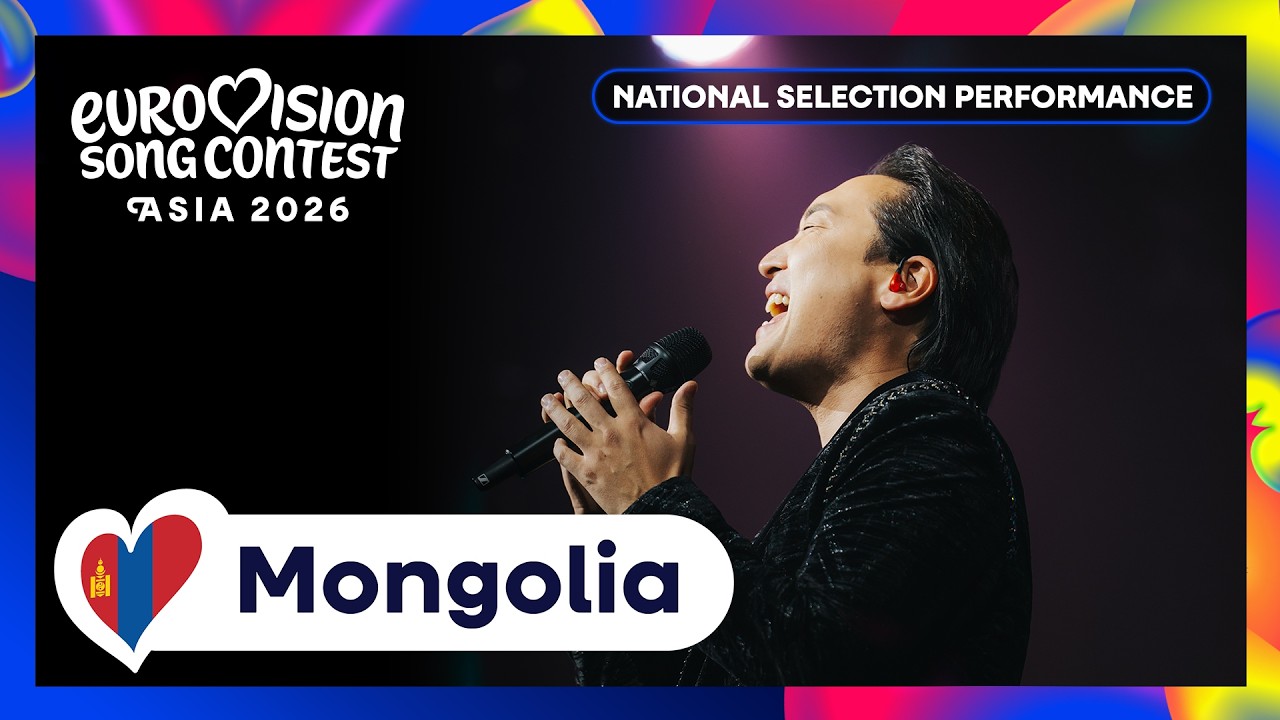 Play Beck — “Light”, national selection performance
 Beck — “Light”
4% 24/1 unchanged since 7 OctBeck's song is chosen: "Light," sung in Mongolian, won Mongolia's Chosen One on 10 October from four candidates. A complete entry is what this figure already assumed, so it holds. Beck is a television host and economist as well as a singer — the least conventional pick in the field — and "Light" has about a month to find an audience beyond Mongolia.
-
Cambodia picks 17 Oct
To be decided
3.5% 27/1 down 0.5 points since 7 OctSeven acts are confirmed for Cambodia's Finest Voice on 17 October — GOOFY, KESORRR, MC PICH, Monetrey, Nov Dana, Sam Rocker and Satiya — and their songs had still not been published three days before the show. Cambodia is now the only country without a song, and its winner will have four weeks, the shortest run-in of anyone. Half a point comes off as every other country completes its entry.


Think we have it wrong? Rank all 11 yourself
Bars show each country's win estimate relative to the leader. Arrows show the change in percentage points since our 7 Oct revision.
Movement
How our estimate has moved
Every figure this page has published, by revision. Nothing is back-filled: these are the numbers that were live on each date.
| Country | 26 Aug | 23 Sep | 7 Oct | 14 Oct | Trend | Since 26 Aug |
|---|---|---|---|---|---|---|
| South Korea | 19% | 19% | 18% | 18% | −1 | |
| Thailand | 15% | 15% | 17% | 17% | +2 | |
| Philippines | 13% | 13% | 13% | 13% | 0 | |
| Vietnam | 7% | 11% | 12% | 12% | +5 | |
| Malaysia | 10% | 9% | 9% | 9.5% | −0.5 | |
| Bangladesh | 7% | 6.5% | 6.5% | 6.5% | −0.5 | |
| Bhutan | 8% | 7.5% | 6.5% | 6.5% | −1.5 | |
| Laos | 4.5% | 6% | 5.5% | 5.5% | +1 | |
| Nepal | 5% | 4.5% | 4.5% | 4.5% | −0.5 | |
| Mongolia | 6% | 4.5% | 4% | 4% | −2 | |
| Cambodia | 5.5% | 4% | 4% | 3.5% | −2 |
All trend lines share one scale, 0–20%. Vietnam is the largest mover of the season: it was marked down in August for having announced nothing, and has since named Tóc Tiên and chosen her song.
The market check
A prediction market has opened — and it doesn't add up yet
Kalshi listed a "Eurovision Song Contest Asia Winner" market on 14 September 2026. We show it next to our own numbers, but don't blend it in. Here's why.
| Country | Our estimate | Last trade | Best bid | Best ask | Contracts traded |
|---|---|---|---|---|---|
| Philippines | 13% | 95¢ | — | 95¢ | 112 |
| Vietnam | 12% | 84¢ | — | 85¢ | 125 |
| South Korea | 18% | 22¢ | — | 81¢ | 61 |
| Thailand | 17% | 18¢ | 5¢ | 83¢ | 261 |
| Bhutan | 6.5% | 15¢ | — | 89¢ | 76 |
| Laos | 5.5% | 8¢ | 10¢ | 89¢ | 2,464 |
| Bangladesh | 6.5% | 6¢ | — | 81¢ | 61 |
| Malaysia | 9.5% | 6¢ | — | 90¢ | 66 |
| Mongolia | 4% | 6¢ | — | 16¢ | 171 |
| Nepal | 4.5% | 5¢ | — | 84¢ | 61 |
| Cambodia | 3.5% | 4¢ | — | 95¢ | 61 |
| Total | 100% | 269¢ | 3,519 |
A contract pays $1 if that country wins, so a price in cents reads like a percentage. In a working market, the eleven prices would add up to about 100. Here the last-traded prices add up to 269 — the Philippines last changed hands at 95¢ and Vietnam at 84¢, which between them already comes to more than certainty.
That is what an almost empty order book looks like. The Philippines was on 53¢ until 11 October, when a single order bought about 28 contracts at 86¢ and then 95¢ — roughly $25 in all. It was the only trade on any country in the week since our previous snapshot. Only two countries had anyone offering to buy at all when we looked: Laos, at 10¢, and Thailand, at 5¢. Everywhere else the best bid was zero, and for ten of the eleven countries the cheapest offer to sell was between 81¢ and 95¢ — including countries we rate below 5%. Around 3,519 contracts have traded in total since launch, more than two-thirds of them on Laos, and none in the 24 hours before the snapshot.
So these are a handful of stray trades, not a crowd's view of the contest. We'll start using market prices when there is two-sided trading to read. The full picture is in our explainer on betting and Eurovision Asia.
Snapshot of public market data taken 14 October 2026, 09:21 UTC. Prices move; this table does not update live. Nothing here is betting or financial advice.
Method
How to read these numbers
These are fan-made estimates, not official EBU figures and not prices anyone is offering. For each country we weigh three things that can actually be observed: the size and production strength of its music industry, how much of its entry is confirmed, and how much promotional runway it has before 14 November. The reasoning under each country says which of those is doing the work.
The percentages always add up to 100, which is why a country can drift down without anything about it getting worse. And no country is above 20% — in a first edition with no voting history, eleven debut entries and a result split evenly between juries and the public, a confident favourite would be a made-up one. See the full methodology for detail.
Quick answers
Eurovision Asia 2026 odds — common questions
- Who is the favourite to win Eurovision Asia 2026?
- South Korea leads our estimate on 18%, with JUNHEE and "Deep Dive", a single point ahead of Thailand on 17%. No country is rated above one chance in five, which is another way of saying the contest is wide open.
- Are these real betting odds?
- No. They are an editorial estimate, shown as a percentage and as the equivalent fractional odds. Mainstream bookmakers have not priced Eurovision Asia. One prediction market has opened, but its prices are too thin to treat as probabilities — we show them on this page for comparison rather than using them.
- How often are the Eurovision Asia odds updated?
- After every national final and every confirmed entry. The current figures were revised on 14 October 2026, and every earlier revision is kept in the table on this page so you can see what moved.
- How is the Eurovision Asia winner decided?
- By a 50/50 split of professional juries and public voting in a single show — there are no semi-finals. Viewers outside the eleven competing countries vote together as one "Rest of the World" bloc.
These are pre-contest estimates. The real scoreboard goes on the Eurovision Asia 2026 results page when the show airs on 14 November; until then, every entry is profiled on the countries page.